
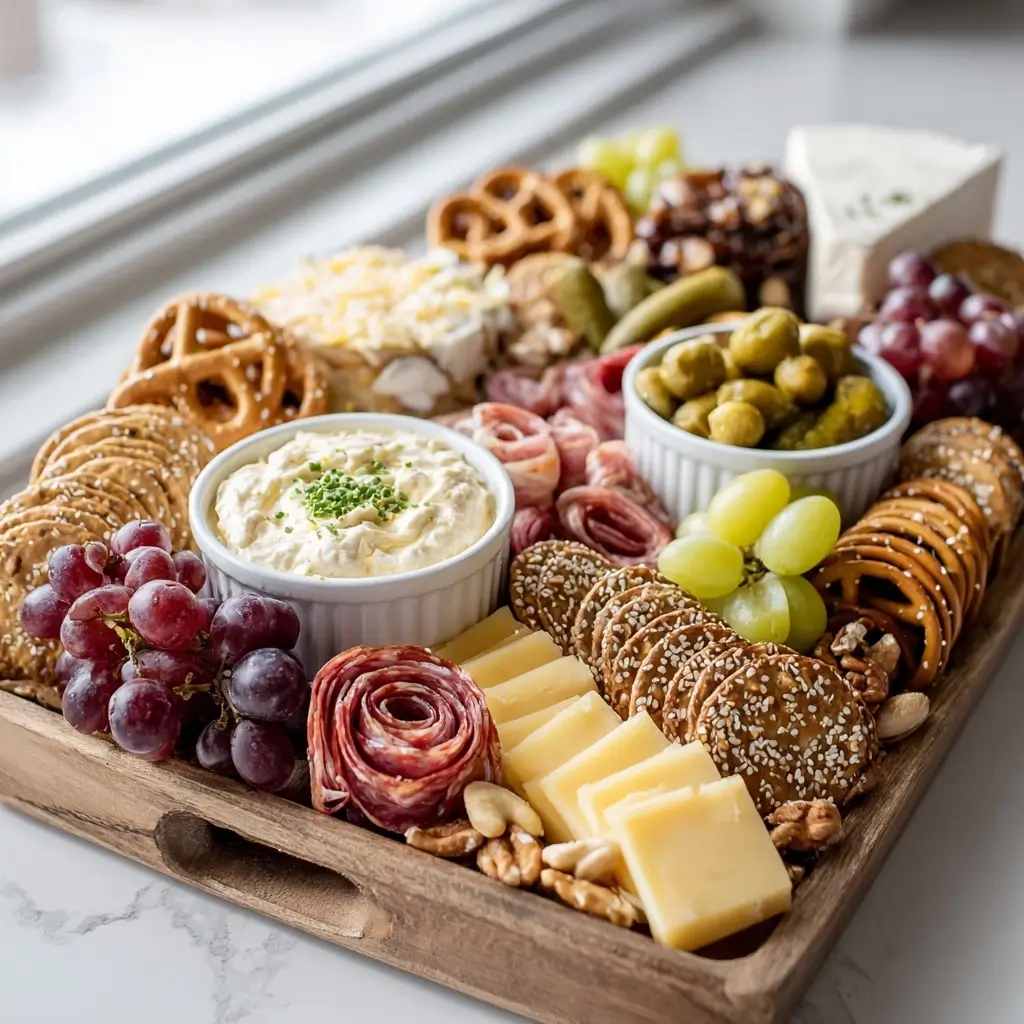
If you are building a beautiful board for the first time, choosing the right cheese can make the whole spread feel effortless. This guide to the best cheeses for a charcuterie board will help you mix flavor, texture, and color in a way that looks lovely and tastes even better.
Charcuterie Cheese Guide
Equipment
- 1 Wooden board or platter or large serving tray
- 1 Cheese knives optional
- 1 Small plates optional
Ingredients
Charcuterie Board Ingredients
- 1 soft cheese such as brie or camembert
- 1 firm cheese such as cheddar or gouda
- 1 blue cheese such as gorgonzola or stilton
- 1 fresh cheese such as mozzarella pearls or goat cheese
- Crackers bread, or breadsticks
- Fresh fruit such as grapes, berries, or sliced apples
- Nuts such as almonds or pistachios
- Honey fig jam, or fruit spread
Instructions
- Start with a wooden board, platter, or large serving tray. The surface does not need to be large, but it should give each cheese room to breathe.
- Set the cheeses around the board with some space between each one. This helps the board feel full and balanced without looking crowded.
- Fill in the open spaces with crackers, bread, or breadsticks. Try to tuck them near the cheeses so guests can build bites easily.
- Scatter grapes, berries, sliced pears, or apples around the board. Then add a small bowl of honey or jam to bring in a sweet contrast.
- Use nuts, olives, or herbs to finish the board. These little touches make the spread feel polished and give every bite more interest.
Notes
Why You’ll Love This Charcuterie Cheese Guide
This guide keeps things simple, which is exactly what a beginner needs. You will learn how to choose cheeses that are crowd-pleasing, easy to slice, and balanced with fruit, crackers, and savory bites.
It also helps you build a board that feels inviting without requiring fancy ingredients. Once you know the basics, you can mix and match with confidence for any gathering.
Charcuterie Cheese Guide Ingredients & Substitutions
Here is a simple starting point for a balanced board.
- 1 soft cheese, such as brie or camembert
- 1 firm cheese, such as cheddar or gouda
- 1 blue cheese, such as gorgonzola or stilton
- 1 fresh cheese, such as mozzarella pearls or goat cheese
- Crackers, bread, or breadsticks
- Fresh fruit, such as grapes, berries, or sliced apples
- Nuts, such as almonds or pistachios
- Honey, fig jam, or fruit spread
If you want substitutions, keep the same texture variety. Swap brie for another creamy wheel, cheddar for manchego, or goat cheese for a herbed cream cheese style spread. For a nut-free board, add extra fruit, olives, or pickles instead.
Step-by-Step Instructions to Make Charcuterie Cheese Guide
Step 1: Choose a board
Start with a wooden board, platter, or large serving tray. The surface does not need to be large, but it should give each cheese room to breathe.
Step 2: Place the cheeses first
Set the cheeses around the board with some space between each one. This helps the board feel full and balanced without looking crowded.
Step 3: Add the crunchy items
Fill in the open spaces with crackers, bread, or breadsticks. Try to tuck them near the cheeses so guests can build bites easily.
Step 4: Add fruit and sweet elements
Scatter grapes, berries, sliced pears, or apples around the board. Then add a small bowl of honey or jam to bring in a sweet contrast.
Step 5: Finish with texture and color
Use nuts, olives, or herbs to finish the board. These little touches make the spread feel polished and give every bite more interest.
Tips for Success
Let the cheeses sit at room temperature for about 20 to 30 minutes before serving, so the flavors open up. Use a mix of shapes, like wedges, slices, crumbles, and rounds, because that makes the board look more inviting.
Keep stronger cheeses smaller in portion, since a little goes a long way. And if you are unsure, choose one familiar cheese, one mild cheese, one creamy cheese, and one bold cheese for a nice range.
Variations of Charcuterie Cheese Guide
You can easily change the board to fit the season or the occasion. For a sweeter board, add figs, chocolate, and dried apricots. For a savory board, include olives, pickles, roasted nuts, and seeded crackers.
If you want a more elegant look, choose cheeses with different colors and shapes, then add fresh herbs for garnish. You can also build a vegetarian board by leaning into fruit, nuts, spreads, and assorted cheeses.
Serving Suggestions: What to Pair with Charcuterie Cheese Guide
This board pairs well with sparkling water, fresh juice, lemonade, or iced tea. It also works beautifully alongside soup, salad, baked chicken, or a simple pasta dinner when you want a relaxed, shareable starter.
For a gathering, serve the board with small plates and cheese knives so everyone can help themselves easily. A little extra honey or jam on the side always makes the board feel special.
Storage & Reheating Instructions
Store leftover cheese in airtight containers or wrap each piece well in parchment and plastic wrap. Keep everything refrigerated, and try to use softer cheeses within a few days for the best texture.
There is no reheating needed. If the cheese has been chilled, let it sit out briefly before serving again so the flavors are more pleasant and the texture is easier to enjoy.
Memories Made Around the Table
Some of my favorite gatherings have started with a simple board in the center of the table. People naturally lean in, share stories, and reach for just one more bite, and that quiet kind of connection is what makes a cheese board so lovely.
FAQs
What cheeses are best for beginners?
Begin with a soft cheese, a firm cheese, a blue cheese, and a fresh cheese. That mix gives you variety without making the board complicated.
How many cheeses should I include?
Three to five cheeses is usually enough for a beginner-friendly board. That amount gives variety while keeping the presentation manageable.
How much cheese do I need per person?
A good starting point is about 2 to 3 ounces of cheese per person for a snack board, or more if the board is the main event.
Can I make the board ahead of time?
Yes, you can prep most items ahead of time. Assemble the firmer ingredients early, then add softer cheeses and fresh fruit closer to serving time.
What if I do not like blue cheese?
You can skip it and add another mild or aged cheese instead. A board still feels balanced with just soft, firm, and fresh cheeses.
Final Thoughts
Once you understand the basics, building a beautiful cheese board becomes easy and fun. The best cheeses for a charcuterie board are simply the ones that offer variety, balance, and a mix of textures your guests will enjoy.