
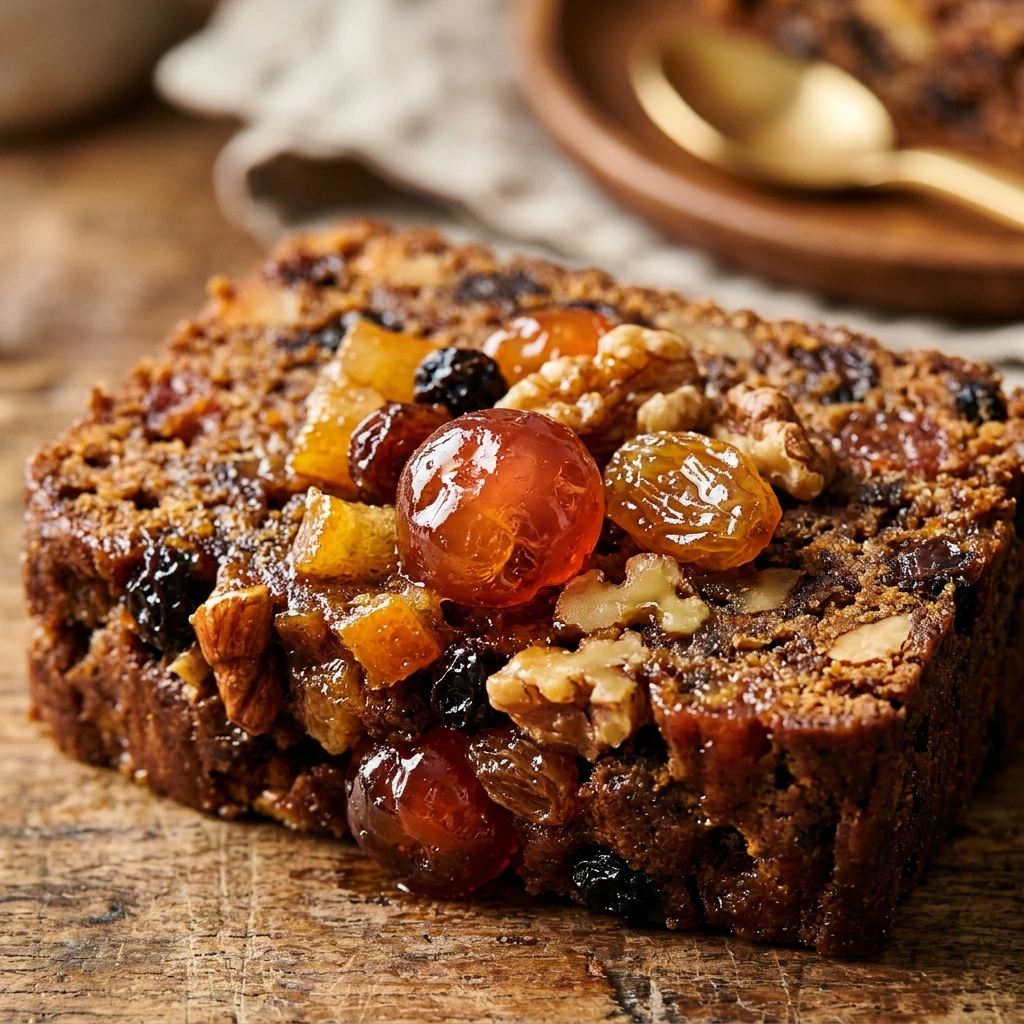
Every year when the air gets chilly and the Christmas lights start twinkling, I find myself reaching for my grandmother’s heavy mixing bowl to start our holiday baking. There is something so incredibly special about the ritual of chopping dried fruits and the warm, spicy aroma that fills my entire home as this cake bakes in the oven. I truly believe this recipe will change your mind about fruitcake forever because it is remarkably moist, perfectly spiced, and packed with festive flavor without being overly heavy.
Recipe Details
Recipe Information
- Prep Time: 30 minutes
- Cook Time: 2 hours 30 minutes
- Total Time: 3 hours
- Servings: 12 servings
- Difficulty: Medium
Nutrition Information (Per Serving)
- Calories: 385
- Protein: 5g
- Carbs: 58g
- Fat: 16g
Why You’ll Love The BEST Traditional Fruitcake
This fruitcake is a far cry from the dry, rock-hard versions you might have seen in old movies. It is incredibly tender and rich, thanks to the careful balance of butter and fruit juices that keep every bite succulent. Because we are skipping the traditional long aging process with spirits, the natural flavors of the cinnamon, nutmeg, and citrus really get a chance to shine. It is the perfect centerpiece for a Christmas dessert table, offering a nostalgic taste that brings family and friends together during the most wonderful time of the year.
The BEST Traditional Fruitcake Ingredients & Substitutions
- 1 cup unsalted butter, softened to room temperature
- 1 cup dark brown sugar, firmly packed
- 4 large eggs, at room temperature
- 2 cups all-purpose flour
- 1 teaspoon baking powder
- 1/2 teaspoon salt
- 1 teaspoon ground cinnamon
- 1/2 teaspoon ground nutmeg
- 1/2 teaspoon ground ginger
- 1/2 cup fresh orange juice
- 1 tablespoon alcohol-free vanilla extract
- 2 cups mixed raisins, currants, and sultanas
- 1 cup glace cherries, sliced in half
- 1/2 cup chopped candied citrus peel
- 1 cup chopped pecans or walnuts
If you prefer a different texture, you can swap the pecans for slivered almonds or even macadamia nuts for a buttery crunch. For the fruit blend, feel free to use dried cranberries or chopped dates instead of currants if they are easier to find in your local pantry. If you find orange juice too citrusy, white grape juice or even a strong spiced apple cider works beautifully as a liquid base to keep the cake moist.
Step-by-Step Instructions to Make The BEST Traditional Fruitcake
Step 1: Preparation and Oven Setup
Preheat your oven to 300 degrees Fahrenheit. Prepare a 9-inch loaf pan or a deep round cake tin by greasing it generously with butter and lining the bottom and sides with parchment paper. This double lining helps prevent the edges of the fruitcake from browning too quickly during the long baking time.
Step 2: Fruit and Juice Soak
In a medium bowl, combine the raisins, currants, sultanas, cherries, and candied peel. Pour the orange juice and alcohol-free vanilla extract over the fruit, tossing well to coat. Let this mixture sit for at least 20 minutes while you prepare the batter, allowing the fruit to plump up and absorb the liquid.
Step 3: Creaming the Butter and Sugar
In a large mixing bowl, beat the softened butter and dark brown sugar together until the mixture is light, fluffy, and pale in color. This process usually takes about 3 to 5 minutes with an electric mixer and creates the necessary aeration for a tender crumb.
Step 4: Incorporating the Eggs
Add the eggs one at a time, beating well after each addition. If the mixture looks like it is starting to curdle, simply add a tablespoon of your measured flour to help bind it back together. Continue until all eggs are fully integrated.
Step 5: Mixing the Dry Ingredients
Sift together the flour, baking powder, salt, cinnamon, nutmeg, and ginger into a separate bowl. Gradually fold the dry ingredients into the butter mixture using a large spoon or spatula. Be careful not to overmix, as you want to keep the cake light rather than dense and tough.
Step 6: Folding in the Fruit and Nuts
Gently fold in the soaked fruit mixture, including any remaining juice in the bowl, along with the chopped pecans. Stir until the fruit is evenly distributed throughout the thick batter. The batter should be heavy and rich, holding the weight of the fruit easily.
Step 7: The Baking Process
Spoon the batter into the prepared tin and smooth the top with the back of a spoon. Place the tin in the center of the oven and bake for approximately 2 hours and 30 minutes. Check the cake at the 2-hour mark, if the top is browning too quickly, loosely cover it with a piece of foil. The cake is done when a skewer inserted into the center comes out clean.
Step 8: Cooling and Setting
Remove the cake from the oven and let it cool completely in the tin. This allows the structure to set and the flavors to meld. Once fully cooled, remove it from the tin and peel away the parchment paper.
Tips for Success
- Always use room temperature eggs and butter to ensure the batter emulsifies properly and stays smooth.
- Toss your dried fruits in a tablespoon of flour before adding them to the batter to prevent them from sinking to the bottom of the pan.
- Low and slow is the secret to a great fruitcake, so do not be tempted to turn up the oven temperature to speed things up.
- If you want an extra moist cake, you can brush the top with a little extra orange juice while it is still warm from the oven.
- Wrap the finished cake tightly in parchment paper and then foil to keep it fresh for longer periods.
Variations of The BEST Traditional Fruitcake
For a tropical twist, you can replace the raisins with chopped dried pineapple and mango and use coconut milk instead of orange juice. If you are a fan of chocolate, adding half a cup of dark chocolate chips into the batter creates a decadent, modern version of this classic dessert. You can also make miniature fruitcakes by using muffin tins or small decorative molds, just be sure to reduce the baking time to about 35 to 45 minutes.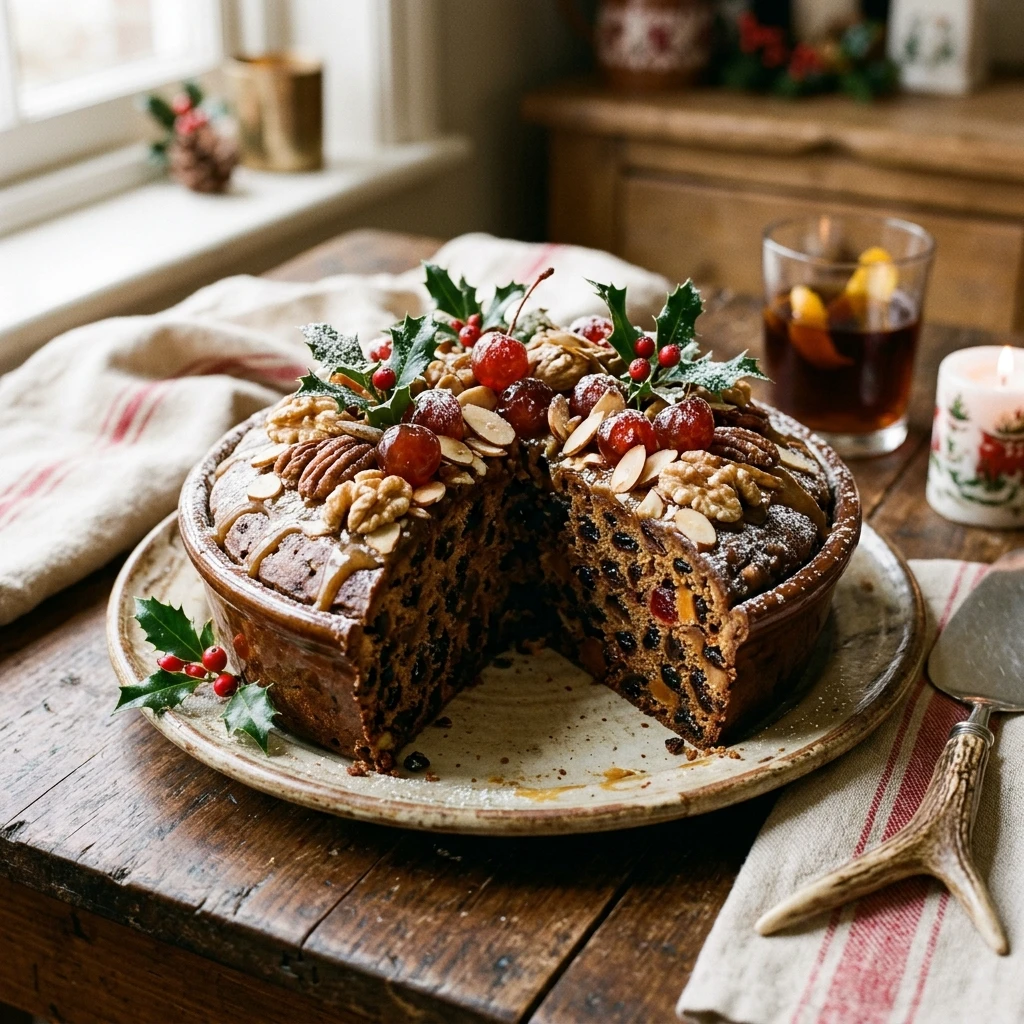
Serving Suggestions: What to Pair with The BEST Traditional Fruitcake
This fruitcake is wonderful when served in thin slices alongside a warm cup of herbal tea or a steaming mug of spiced apple cider. For a more indulgent Christmas treat, serve a slice with a dollop of thick whipped cream or a generous piece of sharp white cheddar cheese, which balances the sweetness of the fruit perfectly. It also makes a fantastic addition to a holiday brunch spread when lightly toasted and spread with salted butter.
Storage & Reheating Instructions
Store your fruitcake in an airtight container in a cool, dark place for up to two weeks. For longer storage, you can keep it in the refrigerator for up to a month or freeze it for up to three months. To reheat, simply let the cake come to room temperature or warm individual slices in the microwave for 10 to 15 seconds to soften the butter and release the aromas of the spices.
Memories Made Around the Table
I remember sitting at the wooden kitchen table as a child, helping my mother sort through the brightly colored cherries and golden raisins. The house always felt so cozy with the heater humming and the scent of cinnamon swirling through the air. Cutting into that first slice of fruitcake on Christmas Eve felt like the true start of the celebrations, and I love that I can now share that same warm tradition with my own family every December.
FAQs
How do I prevent my fruitcake from being too dry?
The key to a moist fruitcake is the fruit-to-batter ratio and the baking temperature. Ensure you soak your dried fruits in juice before adding them to the batter, as this prevents the fruit from drawing moisture out of the cake itself. Also, baking at a low temperature of 300 degrees Fahrenheit ensures the cake cooks evenly without the edges drying out before the center is done.
Can I make this cake ahead of time?
Yes, this cake actually improves with a little bit of time. You can bake it two or three days before you plan to serve it. This allows the spices to deepen and the moisture from the fruit to distribute evenly throughout the crumb, making it even more delicious on Christmas day.
Why did my fruit sink to the bottom of the cake?
Fruit usually sinks if the batter is too thin or if the fruit is too wet. To prevent this, make sure your butter and sugar are creamed until very fluffy to provide structure. You should also pat your soaked fruit dry or toss it in a light coating of flour before folding it into the mixture.
What can I use if I do not have orange juice?
If you are out of orange juice, you can use apple juice, white grape juice, or even a strong brew of black tea. The acidity and moisture in these liquids will perform a similar role to the orange juice, ensuring the cake remains tender and flavorful.
How should I store the cake for the best flavor?
For the best flavor, wrap the cake tightly in parchment paper and then a layer of aluminum foil. Store it in an airtight container in a cool place. This prevents the cake from absorbing other odors and keeps the moisture locked inside so every slice is as good as the first.
Final Thoughts
The BEST Traditional Fruitcake is a wonderful way to embrace the spirit of Christmas and bring a touch of nostalgia to your holiday celebrations. With its rich textures and warm spices, it is a dessert that truly stands the test of time and proves that fruitcake can be the highlight of the season. I hope this recipe finds a permanent place in your holiday baking rotation and brings as much joy to your home as it does to mine.
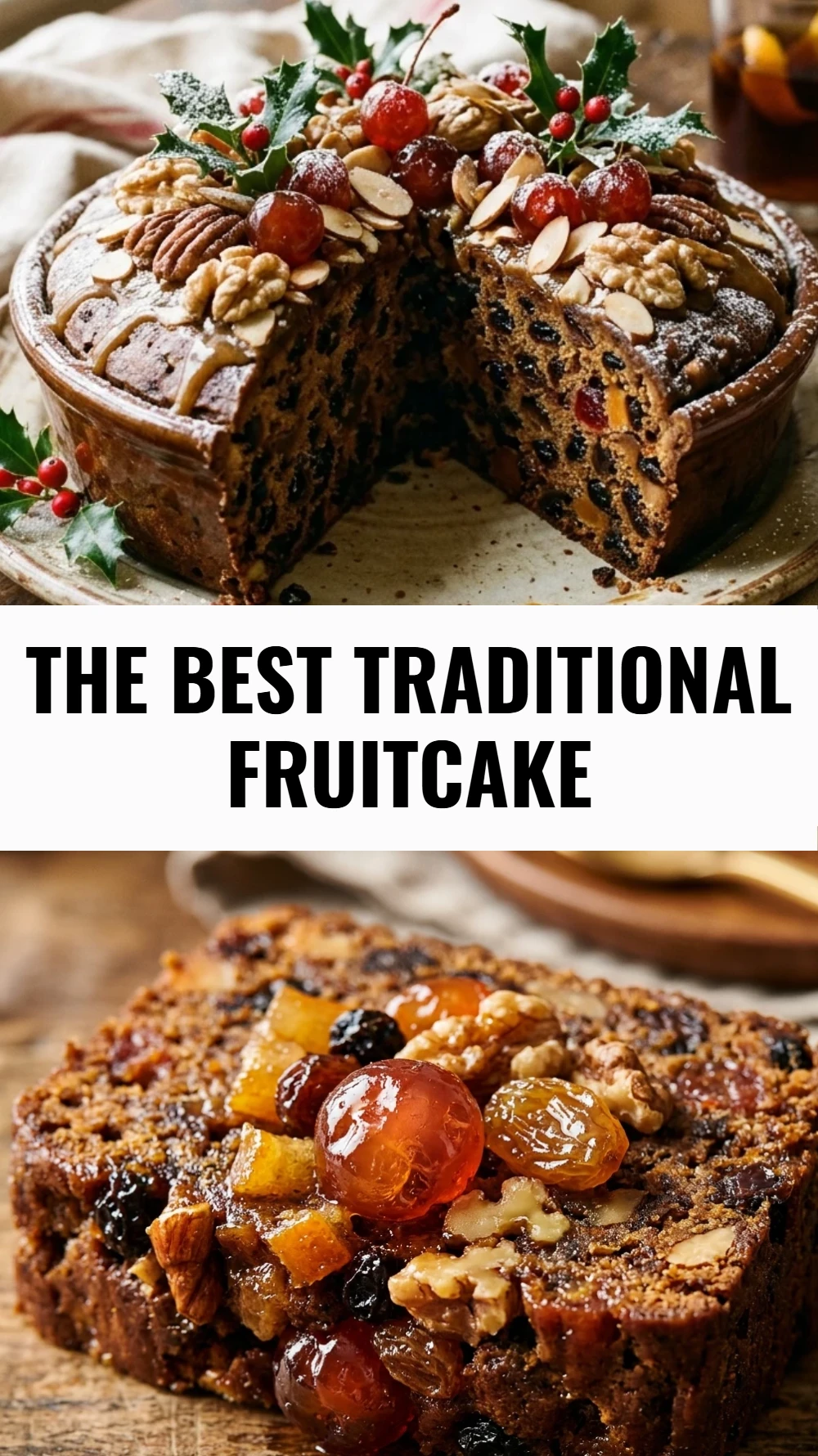
The BEST Traditional Fruitcake
- Total Time: 3 hours
Ingredients
- 1 cup unsalted butter, softened to room temperature
- 1 cup dark brown sugar, firmly packed
- 4 large eggs, at room temperature
- 2 cups all-purpose flour
- 1 teaspoon baking powder
- 1/2 teaspoon salt
- 1 teaspoon ground cinnamon
- 1/2 teaspoon ground nutmeg
- 1/2 teaspoon ground ginger
- 1/2 cup fresh orange juice
- 1 tablespoon alcohol-free vanilla extract
- 2 cups mixed raisins, currants, and sultanas
- 1 cup glace cherries, sliced in half
- 1/2 cup chopped candied citrus peel
- 1 cup chopped pecans or walnuts
Instructions
- Preheat your oven to 300 degrees Fahrenheit. Prepare a 9-inch loaf pan or a deep round cake tin by greasing it generously with butter and lining the bottom and sides with parchment paper. This double lining helps prevent the edges of the fruitcake from browning too quickly during the long baking time.
- In a medium bowl, combine the raisins, currants, sultanas, cherries, and candied peel. Pour the orange juice and alcohol-free vanilla extract over the fruit, tossing well to coat. Let this mixture sit for at least 20 minutes while you prepare the batter, allowing the fruit to plump up and absorb the liquid.
- In a large mixing bowl, beat the softened butter and dark brown sugar together until the mixture is light, fluffy, and pale in color. This process usually takes about 3 to 5 minutes with an electric mixer and creates the necessary aeration for a tender crumb.
- Add the eggs one at a time, beating well after each addition. If the mixture looks like it is starting to curdle, simply add a tablespoon of your measured flour to help bind it back together. Continue until all eggs are fully integrated.
- Sift together the flour, baking powder, salt, cinnamon, nutmeg, and ginger into a separate bowl. Gradually fold the dry ingredients into the butter mixture using a large spoon or spatula. Be careful not to overmix, as you want to keep the cake light rather than dense and tough.
- Gently fold in the soaked fruit mixture, including any remaining juice in the bowl, along with the chopped pecans. Stir until the fruit is evenly distributed throughout the thick batter. The batter should be heavy and rich, holding the weight of the fruit easily.
- Spoon the batter into the prepared tin and smooth the top with the back of a spoon. Place the tin in the center of the oven and bake for approximately 2 hours and 30 minutes. Check the cake at the 2-hour mark, if the top is browning too quickly, loosely cover it with a piece of foil. The cake is done when a skewer inserted into the center comes out clean.
- Remove the cake from the oven and let it cool completely in the tin. This allows the structure to set and the flavors to meld. Once fully cooled, remove it from the tin and peel away the parchment paper.
- Cook Time: 3 hours
- Diet: Vegetarian