
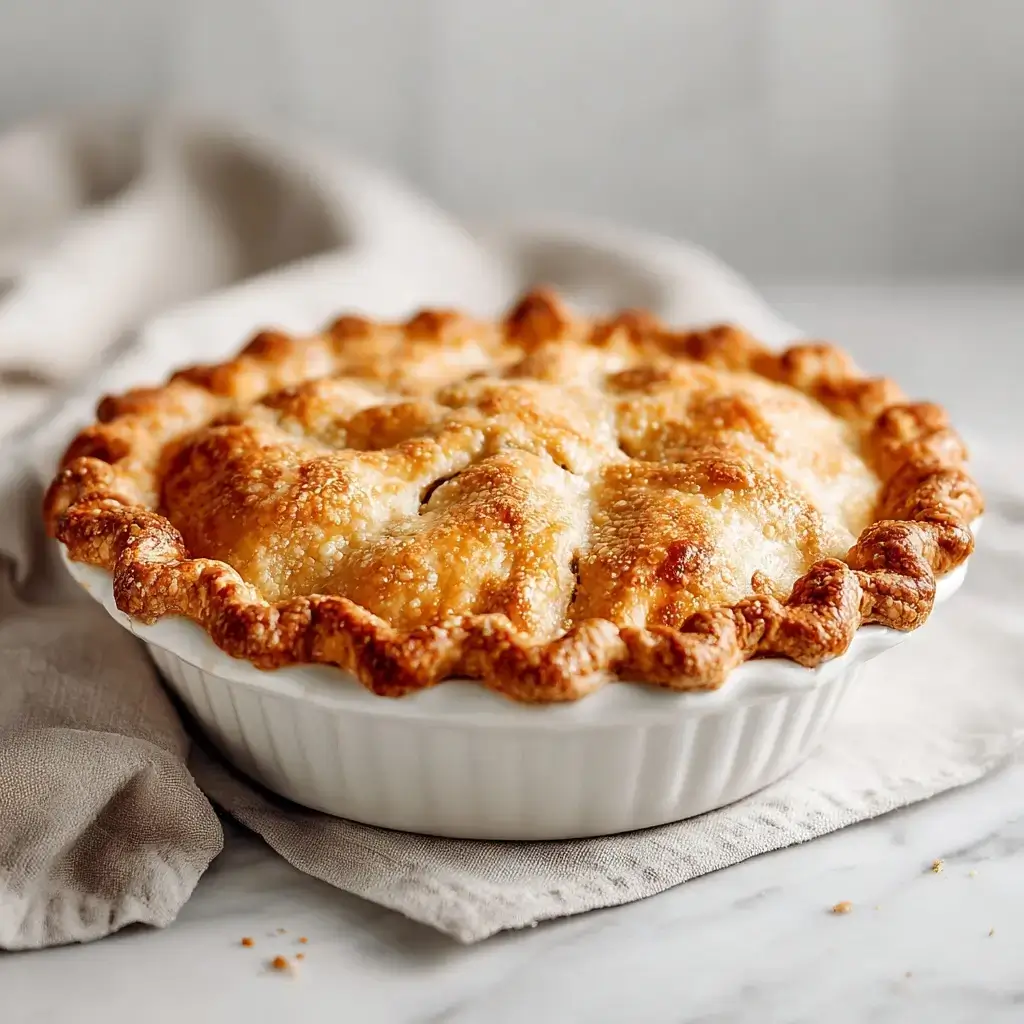
If you have flour, butter, and a splash of cold water, you can make a pie crust that rivals your favorite bakery. This Easy Homemade Pie Crust from Scratch is tender, ultra flaky, and surprisingly simple with a few smart tips. Once you try it, store-bought crust will be a distant memory.
Easy Homemade Pie Crust from Scratch (Flaky, Foolproof)
Equipment
- 1 Mixing Bowl
- 1 Rolling Pin
- 1 Pastry cutter or use fingertips
- 1 9-inch pie plate
- 1 Parchment Paper
- 1 Pie weights or dried beans
- 1 Fork
- 1 Baking Sheet preheated recommended
Ingredients
Pie Crust
- 1.25 cup all-purpose flour
- 0.5 tsp fine sea salt
- 1 tbsp granulated sugar optional; for sweet pies
- 0.5 cup unsalted butter very cold, cubed
- 3 tbsp ice water ice-cold; add more as needed (up to 5 tbsp)
- 1 tsp apple cider vinegar or vodka optional
Instructions
Make the Dough
- Place your mixing bowl and rolling pin in the fridge for 10 minutes. Fill a cup with ice and water so it is very cold.
- Whisk flour, salt, and sugar in a chilled bowl until evenly combined.
- Add cold butter cubes. Use a pastry cutter or fingertips to work the butter into the flour until pea-sized pieces remain with some larger flat dime-sized shards. Visible butter equals flaky layers.
- Sprinkle in 3 tbsp ice water plus vinegar or vodka if using. Toss with a fork. Add more water 1 tsp at a time until the dough just starts to clump. It should look shaggy, not wet.
- Turn the mixture onto the counter. Gently press and fold the dough a few times to bring it together. Use the heel of your hand to quickly smear portions across the counter once or twice to create thin buttery streaks. Do not overwork.
- Form into a 1-inch thick disc. Wrap tightly and refrigerate at least 1 hour, up to 3 days.
Roll, Shape, and Bake
- Lightly flour your surface. Roll from the center outward, rotating a quarter turn every few strokes, until about 12 inches wide and 1/8 inch thick. If it sticks, dust with a little flour and keep moving.
- Roll the dough loosely around the pin and unroll over a 9-inch pie plate. Ease it into the corners without stretching. Trim to a 1-inch overhang, fold under, and crimp as desired.
- Refrigerate the shaped crust 20 to 30 minutes or freeze 10 to 15 minutes to help it hold its shape.
- For a no-bake filling or custards that need a par-baked shell: Heat oven to 400°F (200°C). Line the chilled crust with parchment, fill to the rim with pie weights or dried beans. Bake 15 minutes, remove weights, dock with a fork, then bake 5 to 8 minutes more for par-baked or 10 to 15 minutes for fully baked until golden.
Notes
Why You’ll Love This Easy Homemade Pie Crust from Scratch
- Truly flaky layers thanks to cold butter and gentle handling.
- Beginner friendly with clear visual cues and simple steps.
- Versatile for sweet pies, savory quiches, galettes, and tarts.
- Make-ahead and freezer friendly for effortless baking days.
- Only 5 basic ingredients you probably already have.
Easy Homemade Pie Crust from Scratch Ingredients & Substitutions
Yield: 1 single 9-inch crust. Double everything for a double-crust pie.
- All-purpose flour: 1 1/4 cups (150 g). Substitute: a quality 1:1 gluten-free blend works well; or swap up to 1/3 cup with whole wheat pastry flour for a nuttier flavor.
- Fine sea salt: 1/2 tsp. Helps balance sweetness and enhances flavor.
- Granulated sugar: 1 tbsp, optional for sweet pies. Skip for savory or reduce to 1 tsp.
- Unsalted butter, very cold and cubed: 1/2 cup (113 g). Substitute: plant-based butter sticks or 50% butter + 50% shortening for extra tenderness.
- Ice water: 3 to 5 tbsp (45 to 75 ml), as needed. Add just until the dough holds together when gently squeezed.
- Optional booster: 1 tsp apple cider vinegar or vodka to inhibit gluten and keep the crust tender.
All ingredients should be cold. For hot kitchens, chill the flour and even the mixing bowl for 10 minutes.
Step-by-Step Instructions to Make Easy Homemade Pie Crust from Scratch
1. Chill Your Tools and Prep Ice Water
Place your mixing bowl and rolling pin in the fridge for 10 minutes. Fill a cup with ice and water so it is very cold.
2. Combine Dry Ingredients
Whisk flour, salt, and sugar in a chilled bowl until evenly combined.
3. Cut In the Butter
Add cold butter cubes. Use a pastry cutter or fingertips to work the butter into the flour until pea-sized pieces remain with some larger flat dime-sized shards. Visible butter equals flaky layers.
4. Add Ice Water Gradually
Sprinkle in 3 tbsp ice water plus vinegar or vodka if using. Toss with a fork. Add more water 1 tsp at a time until the dough just starts to clump. It should look shaggy, not wet.
5. Bring Dough Together
Turn the mixture onto the counter. Gently press and fold the dough a few times to bring it together. Use the heel of your hand to quickly smear portions across the counter once or twice to create thin buttery streaks. Do not overwork.
6. Shape and Chill
Form into a 1-inch thick disc. Wrap tightly and refrigerate at least 1 hour, up to 3 days. This relaxes gluten and chills the butter for better flakes.
7. Roll Out
Lightly flour your surface. Roll from the center outward, rotating a quarter turn every few strokes, until about 12 inches wide and 1/8 inch thick. If it sticks, dust with a little flour and keep moving.
8. Fit Into the Pie Plate
Roll the dough loosely around the pin and unroll over a 9-inch pie plate. Ease it into the corners without stretching. Trim to a 1-inch overhang, fold under, and crimp as desired.
9. Chill Again
Refrigerate the shaped crust 20 to 30 minutes or freeze 10 to 15 minutes. Cold dough holds its shape and minimizes shrinking.
10. Blind Bake or Fill
For a no-bake filling or custards that need a par-baked shell: Heat oven to 400°F (200°C). Line the chilled crust with parchment, fill to the rim with pie weights or dried beans. Bake 15 minutes, remove weights, dock with a fork, then bake 5 to 8 minutes more for par-baked or 10 to 15 minutes for fully baked until golden.
Tips for Success
- Keep everything cold. If the dough softens, pop it back in the fridge for 10 minutes.
- Hydrate slowly. Stop adding water as soon as the dough holds when squeezed.
- Do not stretch the dough in the pan. Stretched dough shrinks in the oven.
- Chill before baking for crisp, defined edges.
- Use metal or glass pie plates for best browning. Ceramic runs cooler and may need extra minutes.
Variations of Easy Homemade Pie Crust from Scratch
- All-Butter Classic: As written for maximum flavor and flaky layers.
- Butter-Shortening Blend: Use 6 tbsp butter + 2 tbsp shortening for extra tenderness and easy crimping.
- Savory Herb Crust: Omit sugar and add 1 tsp chopped thyme or rosemary plus 1/4 tsp black pepper.
- Brown Sugar Dessert Crust: Swap granulated sugar for light brown sugar for subtle caramel notes.
- Sourdough Discard: Mix 2 tbsp discard into the water, then reduce water slightly as needed.
- Gluten-Free: Use a 1:1 gluten-free baking flour with xanthan gum and add 1 extra tsp water if needed.
Serving Suggestions: What to Pair with Easy Homemade Pie Crust from Scratch
- Classic apple, bourbon pecan, or silky pumpkin pies.
- Lemon meringue or chocolate cream with a fully baked shell.
- Quiche Lorraine, veggie quiche, or chicken pot pie for savory.
- Seasonal galettes topped with vanilla ice cream or whipped cream.
Storage & Reheating Instructions
- Unbaked dough: Wrap well and refrigerate up to 3 days or freeze up to 3 months. Thaw overnight in the fridge before rolling.
- Shaped, unbaked shell: Freeze in the pie plate, wrapped, up to 2 months. Bake from frozen, adding 5 to 10 extra minutes.
- Blind-baked shell: Cool completely. Store airtight at room temperature up to 2 days. Recrisp at 350°F (175°C) for 5 to 8 minutes.
- Filled pies: Follow the filling’s storage rules. To reheat slices, warm at 325°F (165°C) for 10 to 15 minutes for a crisp bottom.
Memories Made Around the Table
My first successful pie crust was a rainy afternoon triumph that perfumed the whole kitchen with butter. Every flaky bite reminded me that simple ingredients can feel like a celebration.
FAQs
Why did my pie crust turn tough?
Too much water or overworking the dough develops gluten. Hydrate just until it holds together and keep the handling minimal. Always chill before rolling.
How do I prevent shrinking?
Avoid stretching the dough, let it rest in the fridge after shaping, and bake cold. Using pie weights for the first part of the bake also helps.
Can I make the dough in a food processor?
Yes. Pulse dry ingredients, add butter and pulse 6 to 8 times, then drizzle water and pulse just until clumps form. Stop before it forms a ball, then bring together by hand.
Butter vs shortening: which is better?
Butter delivers superior flavor and crisp flaky layers. A small amount of shortening can add tenderness and help maintain decorative edges.
How do I avoid a soggy bottom?
Use a preheated baking sheet, bake on a lower rack, and par-bake for juicy fillings. Glass or metal plates brown better than ceramic.
Final Thoughts
With a few mindful steps and cold ingredients, this Easy Homemade Pie Crust from Scratch becomes a reliable staple for every pie season. Once you master the feel of the dough, the flaky results come naturally.