
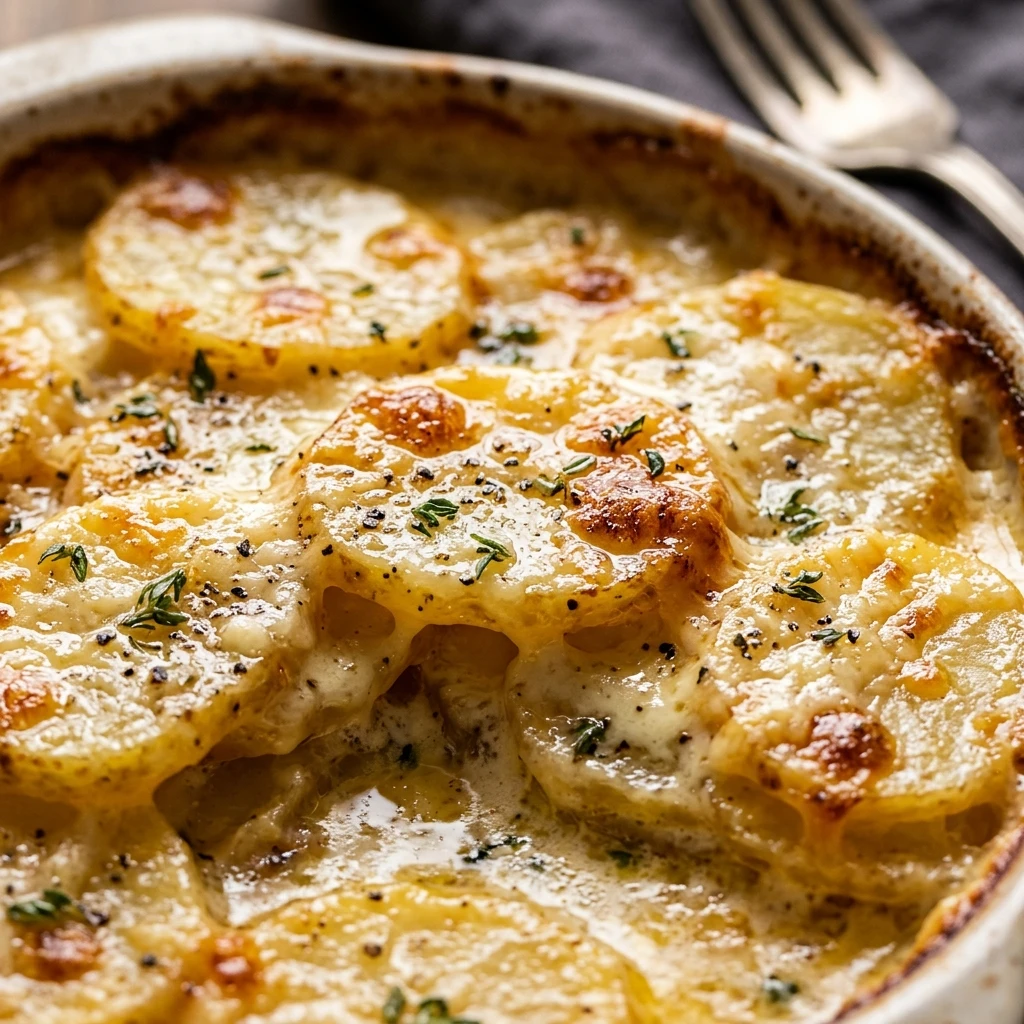
I always find that Christmas dinner is truly defined by the side dishes, and these Dauphinoise Potatoes are the ultimate showstopper on my festive table. There is something so magical about the way thinly sliced potatoes transform into a rich, velvety masterpiece when bathed in garlic-infused cream. I love how the golden crust crackles under a fork to reveal the tender layers underneath, making it the perfect companion for a holiday roast.
Recipe Details
Recipe Information
- Prep Time: 20 minutes
- Cook Time: 1 hour 15 minutes
- Total Time: 1 hour 35 minutes
- Servings: 6 servings
- Difficulty: Medium
Nutrition Information (Per Serving)
- Calories: 420 kcal
- Protein: 5g
- Carbs: 32g
- Fat: 31g
Why You’ll Love This Dauphinoise Potatoes
This dish is the height of holiday luxury. Unlike a standard potato bake, this recipe relies on the natural starches of the potatoes to create a thick, luscious sauce without the need for a floury roux. It is incredibly convenient for Christmas Day because you can assemble it ahead of time, allowing you to focus on the main course. The infusion of garlic and nutmeg provides a subtle warmth that complements the richness of the cream, ensuring every bite feels like a festive celebration.
Dauphinoise Potatoes Ingredients & Substitutions
- 1 kg (2.2 lbs) floury potatoes, such as King Edward or Maris Piper
- 500 ml (2 cups) heavy cream
- 100 ml (1/2 cup) whole milk
- 3 cloves garlic, peeled and smashed
- 2 tablespoons butter, plus extra for greasing
- 1/2 teaspoon ground nutmeg
- 1 teaspoon salt
- 1/2 teaspoon black pepper
- 2 sprigs fresh thyme
For the best results, use a starchy potato variety to help thicken the sauce. If you prefer a lighter version, you can increase the milk and decrease the heavy cream, though the texture will be less indulgent. You can substitute fresh thyme with rosemary for a more earthy holiday aroma, or add a handful of grated hard cheese like Gruyere between layers if you enjoy a cheesy crust. If you need a dairy-free alternative, coconut cream can work, though it will alter the flavor profile significantly.
Step-by-Step Instructions to Make Dauphinoise Potatoes
Step 1: Preparation and Infusion
Start by preheating your oven to 160 degrees Celsius (320 degrees Fahrenheit). In a small saucepan over medium heat, combine the heavy cream, milk, smashed garlic cloves, and thyme sprigs. Bring the mixture to a gentle simmer, then remove it from the heat and let it steep for at least 10 minutes. This allows the aromatics to flavor the cream deeply. Use a bit of butter to generously grease a large baking dish.
Step 2: Slicing the Potatoes
Peel the potatoes and slice them very thinly, about 3 millimeters thick. Using a mandoline slicer is the best way to ensure uniform thickness, which helps the potatoes cook evenly. Crucially, do not wash or soak the potato slices after cutting, as you need the surface starch to thicken the creamy sauce during the baking process.
Step 3: Layering the Dish
Remove the garlic cloves and thyme sprigs from the infused cream and discard them. Stir the salt, black pepper, and ground nutmeg into the cream. Arrange a layer of potato slices in the bottom of the greased baking dish, slightly overlapping them. Pour a small amount of the cream mixture over the layer. Repeat this process until all the potatoes and cream are used, finishing with a final layer of cream on top.
Step 4: The Slow Bake
Place the dish in the center of the oven and bake for about 1 hour to 1 hour and 15 minutes. You want the potatoes to be completely tender when pierced with a knife and the top to be a beautiful golden brown. If the top is browning too quickly, you can loosely cover the dish with foil for the remaining cook time. Once finished, let the dish rest for 10 to 15 minutes before serving to allow the sauce to set.
Tips for Success
To achieve the perfect texture, always choose starchy potatoes rather than waxy ones, as the starch is what binds the cream into a velvety sauce. Slicing the potatoes uniformly is vital for even cooking, so take your time with the knife or use a mandoline. It is also helpful to place the baking dish on a sheet pan to catch any cream that might bubble over the sides during the long bake. Finally, the resting period after the oven is essential. It ensures the layers hold together when you serve them rather than sliding apart.
Variations of Dauphinoise Potatoes
If you want to add a twist to this Christmas classic, consider layering in very thin slices of onion or leeks for an extra savory depth. For a more colorful presentation, you can replace a third of the potatoes with thinly sliced sweet potatoes or parsnips. If you enjoy a bit of texture, sprinkle some crispy turkey bacon bits or chopped chives over the top just before serving. You can also infuse the cream with a hint of lemon zest or a bay leaf for a brighter flavor that cuts through the richness.
Serving Suggestions: What to Pair with Dauphinoise Potatoes
These potatoes are the perfect partner for a traditional Christmas roast turkey or a herb-crusted beef tenderloin. The creamy sauce acts almost like a gravy for the meat. To balance the richness of the dish, serve it alongside some vibrant, acidic sides like roasted Brussels sprouts with balsamic glaze or a crisp green salad with a citrus dressing. It also pairs wonderfully with honey-glazed carrots or steamed green beans tossed in lemon butter.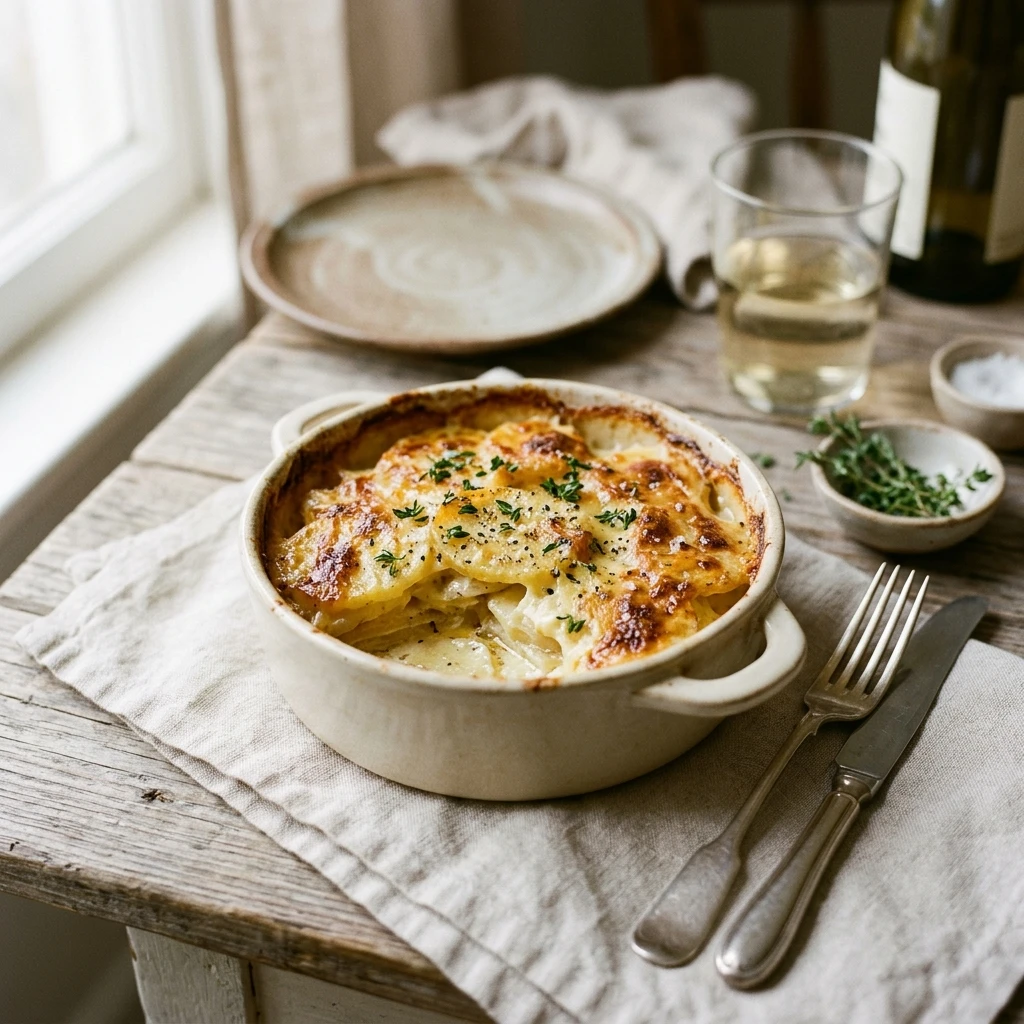
Storage & Reheating Instructions
Leftover Dauphinoise Potatoes can be stored in an airtight container in the refrigerator for up to three days. To reheat, place the desired portion in an oven-safe dish, add a splash of milk or cream to loosen the sauce, and cover with foil. Heat in a 150 degree Celsius (300 degree Fahrenheit) oven until warmed through. This method prevents the cream from separating, which can happen in a microwave. While you can freeze this dish, the texture of the cream may change slightly upon thawing.
Memories Made Around the Table
I remember one particular Christmas where my kitchen was a whirlwind of activity, and I was worried about getting everything to the table at the same time. I had prepared these potatoes the night before, and when I slipped them into the oven on Christmas morning, the smell of garlic and nutmeg filled the house. Seeing my family huddle around the table, eagerly reaching for seconds of this creamy dish, reminded me that the simplest comforts are often the most cherished. It has since become the one recipe my children request every single year.
FAQs
Which potato is best for this recipe?
Floury or starchy potatoes like King Edward, Maris Piper, or Yukon Gold are the best choices. They release starch as they cook, which thickens the cream into a rich sauce. Waxy potatoes tend to stay firm and do not integrate as well with the liquid.
Can I make this dish ahead of time?
Yes, you can assemble the dish and even bake it partially the day before. Simply underbake it by about 15 minutes, let it cool, and store it in the fridge. On the day of your dinner, finish baking it until it is bubbly and golden. This makes holiday meal planning much easier.
Should I peel the potatoes or leave the skin on?
For a traditional and elegant Dauphinoise, it is best to peel the potatoes. The skins can be a bit tough and might detract from the silky, uniform texture that defines this dish. However, if you prefer a rustic look, you can leave them on if you wash them thoroughly.
Why did my cream sauce curdle?
Curdling usually happens if the oven temperature is too high or if you use low-fat milk instead of heavy cream. The high fat content in heavy cream stabilizes the sauce. Always bake at a moderate temperature to ensure the cream remains smooth and luscious.
Do I need to add cheese to make it authentic?
Authentic Dauphinoise Potatoes actually do not contain cheese. The creaminess comes entirely from the combination of heavy cream and potato starch. If you add cheese, the dish technically becomes “Potatoes Gratin,” though many people enjoy adding a little cheese for extra flavor.
Final Thoughts
Whether you are hosting a large family gathering or a quiet festive dinner, these Dauphinoise Potatoes are sure to bring a touch of elegance to your Christmas table. The combination of simple ingredients and slow cooking results in a side dish that is far greater than the sum of its parts. I hope this recipe becomes as much of a holiday tradition in your home as it is in mine. Enjoy the process of layering, the wonderful aromas in your kitchen, and most importantly, the joy of sharing a beautiful meal with loved ones.
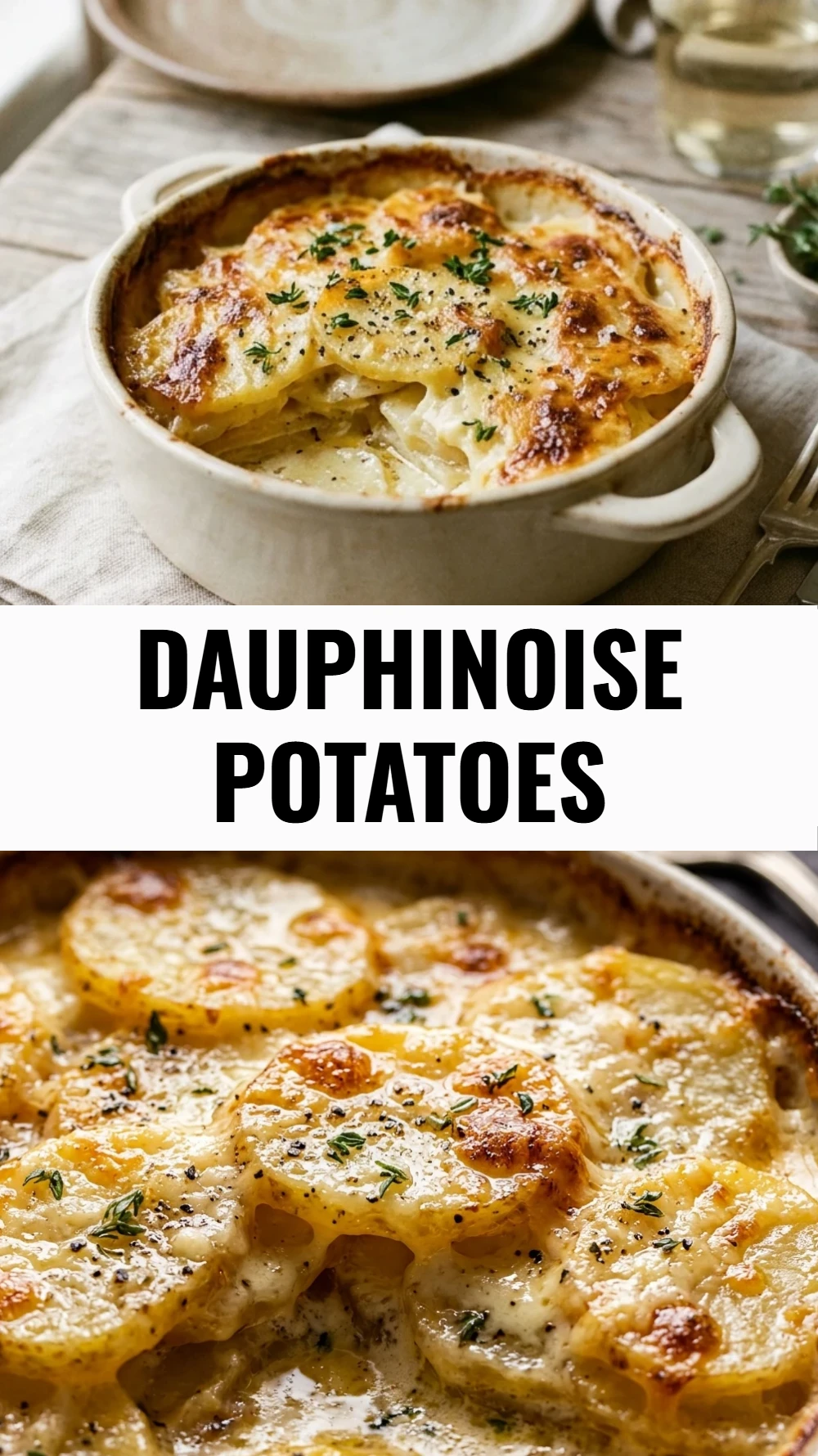
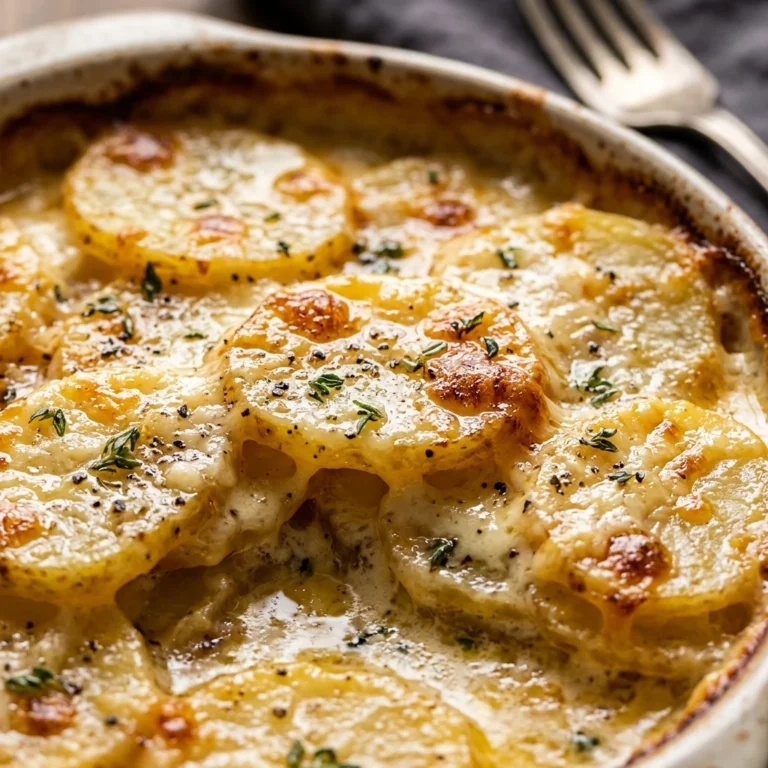
Dauphinoise Potatoes
- Total Time: 1 hour 35 minutes
Ingredients
- 1 kg (2.2 lbs) floury potatoes, such as King Edward or Maris Piper
- 500 ml (2 cups) heavy cream
- 100 ml (1/2 cup) whole milk
- 3 cloves garlic, peeled and smashed
- 2 tablespoons butter, plus extra for greasing
- 1/2 teaspoon ground nutmeg
- 1 teaspoon salt
- 1/2 teaspoon black pepper
- 2 sprigs fresh thyme
Instructions
- Start by preheating your oven to 160 degrees Celsius (320 degrees Fahrenheit). In a small saucepan over medium heat, combine the heavy cream, milk, smashed garlic cloves, and thyme sprigs. Bring the mixture to a gentle simmer, then remove it from the heat and let it steep for at least 10 minutes. This allows the aromatics to flavor the cream deeply. Use a bit of butter to generously grease a large baking dish.
- Peel the potatoes and slice them very thinly, about 3 millimeters thick. Using a mandoline slicer is the best way to ensure uniform thickness, which helps the potatoes cook evenly. Crucially, do not wash or soak the potato slices after cutting, as you need the surface starch to thicken the creamy sauce during the baking process.
- Remove the garlic cloves and thyme sprigs from the infused cream and discard them. Stir the salt, black pepper, and ground nutmeg into the cream. Arrange a layer of potato slices in the bottom of the greased baking dish, slightly overlapping them. Pour a small amount of the cream mixture over the layer. Repeat this process until all the potatoes and cream are used, finishing with a final layer of cream on top.
- Place the dish in the center of the oven and bake for about 1 hour to 1 hour and 15 minutes. You want the potatoes to be completely tender when pierced with a knife and the top to be a beautiful golden brown. If the top is browning too quickly, you can loosely cover the dish with foil for the remaining cook time. Once finished, let the dish rest for 10 to 15 minutes before serving to allow the sauce to set.
- Cook Time: 1 hour 35 minutes
- Diet: Vegetarian, Gluten-Free