
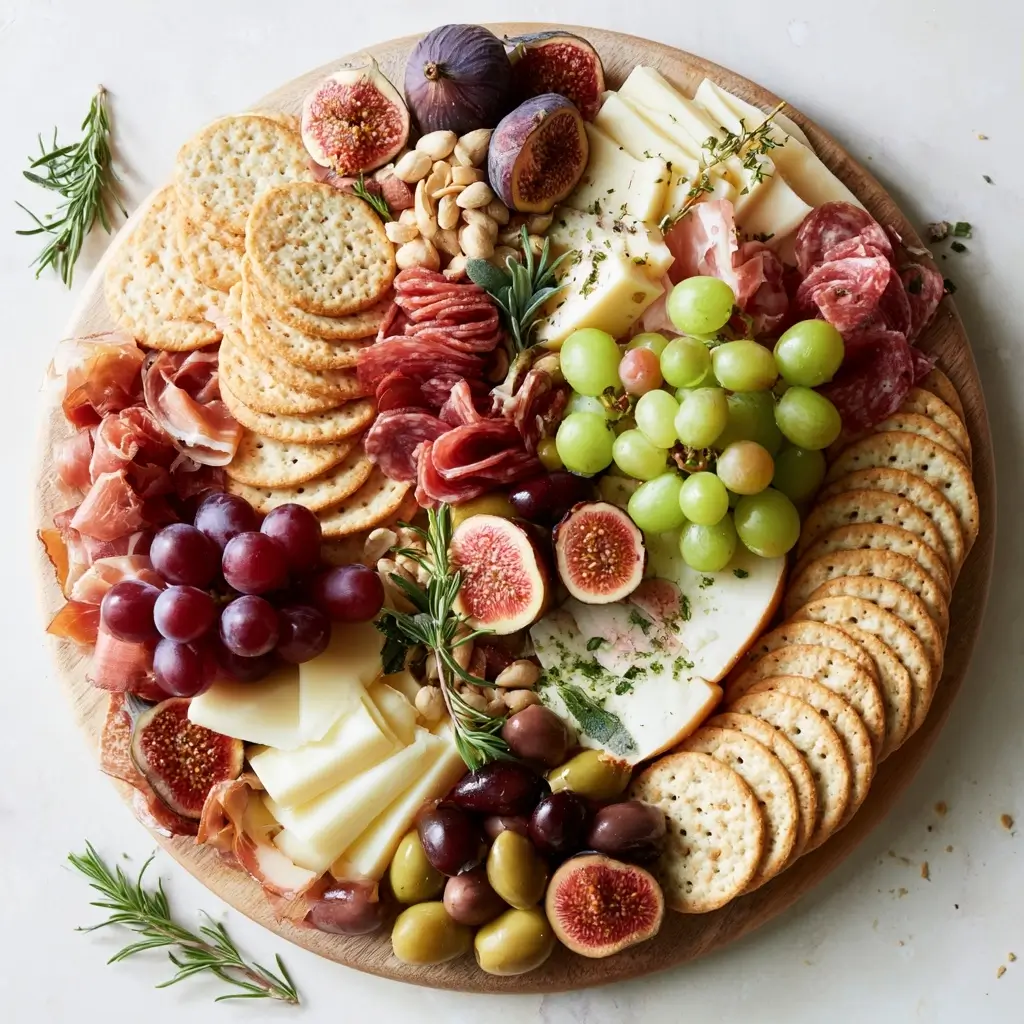
If you want a board that feels inviting, balanced, and beautiful without being fussy, this round charcuterie board guide is a great place to start. The circular shape makes it easy to fill with color, texture, and little bites that look like they were placed with care.
Round Charcuterie Board Guide
Equipment
- 1 Round serving board or platter
- 1 Small bowls for dips
Ingredients
- 3 to 4 cheeses such as cheddar, gouda, brie, or manchego
- 2 to 3 cured meats such as turkey salami, turkey pepperoni, or sliced chicken sausage
- Fresh fruit such as grapes, berries, figs, apple slices, or orange segments
- Crackers and breadsticks
- Mixed nuts such as almonds, pistachios, or cashews
- Olives or pickles
- Fresh vegetables such as cucumbers, radishes, cherry tomatoes, or snap peas
- Dips or spreads such as hummus, honey, mustard, or fruit preserves
- Garnishes such as fresh herbs, edible flowers, citrus slices, or pomegranate seeds
Instructions
- Start with a round serving board, large platter, or even a big dinner plate if you are making a smaller spread. Wipe it clean and imagine it as a clock face so you can place items with balance.
- Set down the larger pieces first, like small bowls of dip, wedges of cheese, or clusters of fruit. Space them around the board to create natural sections and give the arrangement structure.
- Fill in the spaces with meats folded into ribbons, crackers stacked in small fans, and nuts tucked into open areas. Keep the layout relaxed, but make sure each item has a little room to shine.
- Place bright fruit, herbs, and any edible flowers near the edges and between heavier items. This is where the board starts to feel full and finished, so use garnish to soften gaps and add movement.
- Step back and check the board from above. If one side feels heavy, add a few crackers, berries, or herbs to even it out. The best round boards feel full, but not crowded.
Notes
Why You’ll Love This Round Charcuterie Board Guide
This style of board is simple to build and easy to customize for any gathering. The round layout naturally draws the eye inward, which makes even a modest spread look abundant and thoughtfully arranged.
It is also flexible. You can mix cheeses, fresh fruit, crackers, nuts, olives, vegetables, dips, and a few garnish touches to create a board that feels polished but still relaxed.
Round Charcuterie Board Guide Ingredients & Substitutions
Use a mix of flavors, colors, and textures so the board feels complete. Here is a reliable starting point:
- 3 to 4 cheeses, such as cheddar, gouda, brie, or manchego
- 2 to 3 cured meats, such as turkey salami, turkey pepperoni, or sliced chicken sausage
- Fresh fruit, such as grapes, berries, figs, apple slices, or orange segments
- Crackers and breadsticks
- Mixed nuts, such as almonds, pistachios, or cashews
- Olives or pickles
- Fresh vegetables, such as cucumbers, radishes, cherry tomatoes, or snap peas
- Dips or spreads, such as hummus, honey, mustard, or fruit preserves
- Garnishes, such as fresh herbs, edible flowers, citrus slices, or pomegranate seeds
Substitutions are easy here. Swap any cheese for a milder or sharper option, use roasted vegetables instead of fresh if you prefer, or replace fruit with dried apricots, dates, or cherries for longer lasting color.
Step-by-Step Instructions to Make Round Charcuterie Board Guide
Step 1, Choose your board
Start with a round serving board, large platter, or even a big dinner plate if you are making a smaller spread. Wipe it clean and imagine it as a clock face so you can place items with balance.
Step 2, Add your anchor items
Set down the larger pieces first, like small bowls of dip, wedges of cheese, or clusters of fruit. Space them around the board to create natural sections and give the arrangement structure.
Step 3, Build around the anchors
Fill in the spaces with meats folded into ribbons, crackers stacked in small fans, and nuts tucked into open areas. Keep the layout relaxed, but make sure each item has a little room to shine.
Step 4, Add color and garnish
Place bright fruit, herbs, and any edible flowers near the edges and between heavier items. This is where the board starts to feel full and finished, so use garnish to soften gaps and add movement.
Step 5, Finish with balance
Step back and check the board from above. If one side feels heavy, add a few crackers, berries, or herbs to even it out. The best round boards feel full, but not crowded.
Tips for Success
Keep the colors varied so the board looks lively. Try to include something creamy, something crunchy, something salty, and something sweet.
Serve cheeses at room temperature for the best flavor, and slice a few items ahead of time so guests can easily help themselves. If you want a cleaner look, group similar items together instead of scattering everything randomly.
Variations of Round Charcuterie Board Guide
For a breakfast version, use yogurt dip, fresh berries, granola clusters, mini pastries, and soft cheeses. For lunch, lean into sliced chicken, hummus, crisp vegetables, and pita wedges.
If you want a sweeter board, focus on chocolate pieces, cookies, fruit, candied nuts, and marshmallow treats. You can also make a seasonal board with figs and pears in fall, citrus and berries in winter, or peaches and cherries in summer.
Serving Suggestions: What to Pair with Round Charcuterie Board Guide
Serve this board with sparkling water, fresh lemonade, iced tea, or a light mocktail. It also works well alongside soup, salad, roasted vegetables, or a simple pasta dish if you are building a bigger meal.
For a gathering, pair it with a second platter of fresh vegetables or a warm dip so guests have both cool and cozy options.
Storage & Reheating Instructions
Store leftovers by separating soft items, crackers, and fresh produce into airtight containers. Cheese should be wrapped well and kept chilled, while cut fruit is best eaten within a day or two.
There is no reheating needed for this board, but if you included toasted bread or baked bites, warm them briefly in the oven before serving again.
Memories Made Around the Table
There is something comforting about a board like this sitting at the center of the table. People lean in, reach for their favorite bites, and start talking more freely, which is often the best part of any meal.
FAQs
How do I make a round charcuterie board look full?
Use a mix of large and small items, then fill the open spaces with crackers, nuts, fruit, and garnish. A full-looking board comes from layering, not from overpacking everything in at once.
What size board should I use?
A smaller round platter works for a cozy snack board, while a larger board is better for parties. If you are unsure, choose a board slightly bigger than you think you need so the arrangement has room to breathe.
Can I make this ahead of time?
Yes, you can prep most of the ingredients a few hours ahead. For the best texture, add crackers and delicate garnishes close to serving time so they stay crisp and fresh.
What are the best garnish arrangement tips?
Place garnish in small clusters instead of spreading it evenly everywhere. Herbs, citrus slices, and berries work especially well when tucked near cheeses or used to frame open spots.
Final Thoughts
This round charcuterie board guide is all about creating something beautiful, simple, and welcoming. Once you get the rhythm of layering and garnishing, you will find it easy to build a board that feels special every time.