
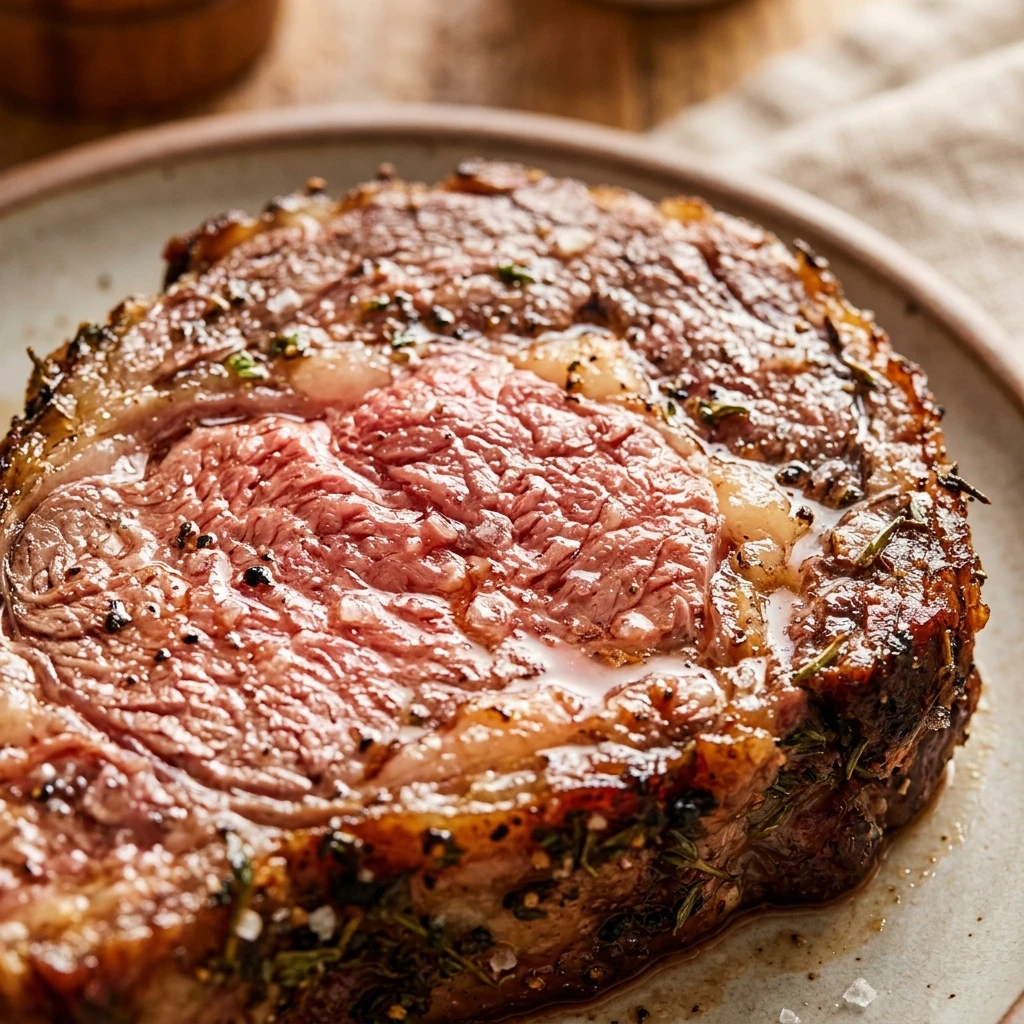
Christmas is the perfect occasion to gather around the table for a truly special meal. I remember the first time I prepared this dish for my family, the house smelled wonderful and everyone was so impressed by the tender results. This Boneless Prime Rib is my favorite way to celebrate because it is simple to prepare yet feels incredibly elegant for a holiday feast.
Recipe Details
Recipe Information
- Prep Time: 30 minutes
- Cook Time: 2 hours 30 minutes
- Total Time: 3 hours 0 minutes
- Servings: 8
- Difficulty: Medium
Nutrition Information (Per Serving)
- Calories: 750
- Protein: 52g
- Carbs: 1g
- Fat: 60g
Why You’ll Love This Boneless Prime Rib
This Boneless Prime Rib is the ultimate holiday centerpiece because it offers a perfect balance of a crispy, herb-crusted exterior and a melt in your mouth interior. Since there are no bones to navigate, carving is a breeze, which means you can serve beautiful, uniform slices to all your Christmas guests without any stress. The combination of garlic and fresh herbs creates a classic profile that feels nostalgic and comforting during the winter season.
Boneless Prime Rib Ingredients & Substitutions
- 6 pound boneless prime rib roast
- 4 tablespoons olive oil
- 6 cloves garlic, minced
- 2 tablespoons fresh rosemary, finely chopped
- 2 tablespoons fresh thyme, finely chopped
- 1 tablespoon kosher salt
- 1 tablespoon cracked black pepper
- 1 cup beef broth
- 1 tablespoon balsamic vinegar
If you do not have fresh rosemary or thyme, you can use dried herbs by reducing the amount to two teaspoons each. For those who want the depth of a traditional pan sauce without using wine, a combination of beef broth and a tablespoon of balsamic vinegar provides a perfect balance of acidity and richness. You may also use softened butter instead of olive oil for the herb rub if you prefer a more buttery crust.
Step-by-Step Instructions to Make Boneless Prime Rib
Step 1: Tempering the Roast
Remove the roast from the refrigerator at least two hours before you plan to cook it. This allows the meat to reach room temperature, which ensures that it cooks evenly from the center to the edges. Pat the meat dry with paper towels to remove any excess moisture.
Step 2: Creating the Seasoning Rub
In a small bowl, combine the olive oil, minced garlic, chopped rosemary, thyme, salt, and pepper. Stir the mixture until it forms a thick paste. This herb rub will create the flavorful crust that prime rib is famous for.
Step 3: Applying the Herbs
Generously coat the entire surface of the roast with the herb mixture. Use your hands to press the seasoning into the meat, making sure every side is well covered. If your roast is not already tied, you can use kitchen twine to secure it into a uniform cylindrical shape.
Step 4: Starting with a High Heat Sear
Preheat your oven to 450 degrees Fahrenheit. Place the roast in a heavy roasting pan, fat side up. Cook the meat at this high temperature for 15 to 20 minutes. This initial blast of heat locks in the juices and starts the browning process for a beautiful crust.
Step 5: The Low and Slow Roast
Reduce the oven temperature to 325 degrees Fahrenheit. Continue roasting until a meat thermometer inserted into the thickest part of the roast reaches your desired level of doneness. For medium-rare, aim for 120 to 125 degrees Fahrenheit. This usually takes about 15 to 20 minutes per pound.
Step 6: Resting and Carving
Once the meat reaches the target temperature, remove it from the oven and transfer it to a cutting board. Tent it loosely with foil and let it rest for at least 20 to 30 minutes. During this time, the internal temperature will rise slightly and the juices will redistribute. Slice the meat into thick portions and serve with the pan juices mixed with broth and balsamic vinegar.
Tips for Success
Always use a digital meat thermometer rather than relying on time alone, as every oven and every piece of meat is slightly different. Make sure the fat cap is facing upward in the roasting pan so the fat melts down over the meat as it cooks, acting as a natural baster. Finally, do not skip the resting period, as this is the secret to a juicy and tender roast.
Variations of Boneless Prime Rib
You can customize the flavor of your roast by adding a tablespoon of horseradish to the herb rub for a bit of a kick. Another lovely holiday variation is to add chopped sage to the herb mix, which provides an earthy flavor that pairs perfectly with traditional Christmas side dishes. If you enjoy a bit of sweetness, a small amount of brown sugar added to the rub can help with caramelization.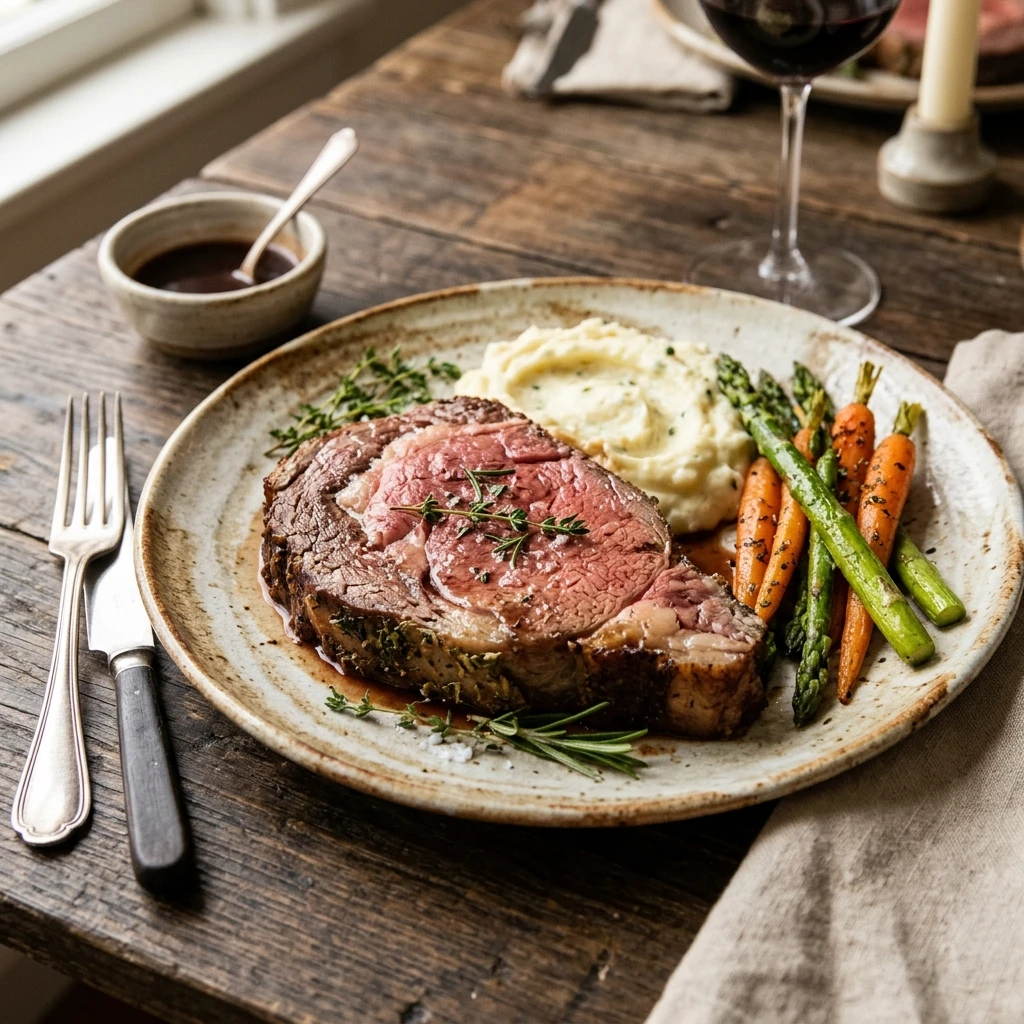
Serving Suggestions: What to Pair with Boneless Prime Rib
For a traditional Christmas dinner, serve this roast alongside creamy mashed potatoes or a decadent potato gratin. Roasted root vegetables like carrots, parsnips, and Brussels sprouts add a beautiful color to the plate. A simple side of steamed green beans with toasted almonds also provides a fresh contrast to the rich beef.
Storage & Reheating Instructions
Store any leftover roast in an airtight container in the refrigerator for up to four days. To reheat, place slices in a baking dish with a few tablespoons of beef broth, cover tightly with foil, and warm in a 300 degree Fahrenheit oven until heated through. This method prevents the meat from drying out or overcooking.
Memories Made Around the Table
I still remember the first Christmas I was in charge of the main course. I spent all morning prepping the vegetables, but the star of the show was definitely the prime rib. Seeing the look on my parents’ faces when I brought that herb-crusted roast to the table is a memory I will cherish forever. It has now become our family tradition, and the holiday just wouldn’t feel the same without it.
FAQs
How do I know when the meat is cooked to medium-rare?
The best way to check for doneness is with a meat thermometer. For medium-rare, pull the roast out of the oven when it hits 120 or 125 degrees Fahrenheit, as the temperature will continue to rise while it rests.
Do I really need to let the meat rest?
Yes, resting is the most important step for a juicy roast. If you cut it too soon, all the flavorful juices will run out onto the cutting board instead of staying in the meat.
Should I cover the roast with foil while it cooks?
Usually, you should leave it uncovered to allow the herb crust to get crispy. However, if the top is browning too quickly during the long roast, you can loosely tent a piece of foil over it.
How much prime rib should I buy per person?
When serving a boneless roast, a good rule of thumb is to plan for about half a pound to three quarters of a pound per person. This allows for generous servings and perhaps a few leftovers for sandwiches the next day.
Can I use a frozen roast for this recipe?
You can, but it must be completely thawed in the refrigerator for two to three days before you plan to cook it. Never try to roast a prime rib from frozen as it will cook unevenly.
Final Thoughts
This Boneless Prime Rib is a show stopping dish that is surprisingly manageable for any home cook. It brings a sense of elegance and celebration to the Christmas table, making your holiday gathering feel truly special. I hope this recipe helps you create wonderful memories with your loved ones this season.
Boneless Prime Rib
- Total Time: 3 hours
Ingredients
- 6 pound boneless prime rib roast
- 4 tablespoons olive oil
- 6 cloves garlic, minced
- 2 tablespoons fresh rosemary, finely chopped
- 2 tablespoons fresh thyme, finely chopped
- 1 tablespoon kosher salt
- 1 tablespoon cracked black pepper
- 1 cup beef broth
- 1 tablespoon balsamic vinegar
Instructions
- Remove the roast from the refrigerator at least two hours before you plan to cook it. This allows the meat to reach room temperature, which ensures that it cooks evenly from the center to the edges. Pat the meat dry with paper towels to remove any excess moisture.
- In a small bowl, combine the olive oil, minced garlic, chopped rosemary, thyme, salt, and pepper. Stir the mixture until it forms a thick paste. This herb rub will create the flavorful crust that prime rib is famous for.
- Generously coat the entire surface of the roast with the herb mixture. Use your hands to press the seasoning into the meat, making sure every side is well covered. If your roast is not already tied, you can use kitchen twine to secure it into a uniform cylindrical shape.
- Preheat your oven to 450 degrees Fahrenheit. Place the roast in a heavy roasting pan, fat side up. Cook the meat at this high temperature for 15 to 20 minutes. This initial blast of heat locks in the juices and starts the browning process for a beautiful crust.
- Reduce the oven temperature to 325 degrees Fahrenheit. Continue roasting until a meat thermometer inserted into the thickest part of the roast reaches your desired level of doneness. For medium-rare, aim for 120 to 125 degrees Fahrenheit. This usually takes about 15 to 20 minutes per pound.
- Once the meat reaches the target temperature, remove it from the oven and transfer it to a cutting board. Tent it loosely with foil and let it rest for at least 20 to 30 minutes. During this time, the internal temperature will rise slightly and the juices will redistribute. Slice the meat into thick portions and serve with the pan juices mixed with broth and balsamic vinegar.
- Cook Time: 3 hours 0 minutes
- Diet: Low-Carb